
Published: November 5, 2025
The holidays often bring families together, a time filled with stories, laughter, and memories that remind us who we are and where we’ve come from. It is also the perfect time to preserve those stories for future generations.
Starting a family history project does not require special equipment or a history degree. With just a phone, a scanner, and a little consistency, you can create something meaningful in only 30 days: a digital archive of stories, photos, and traditions your family can cherish for years.
Below is a simple five-step framework to help you get started on your own family history project.
Why a Family History Project Matters
Many of the stories that shape a family’s identity are passed down casually in conversations at the dinner table or during holidays. Unfortunately, those stories can fade or be lost entirely if they are not documented.
A family history project helps preserve the moments, traditions, and experiences that define your family. Recording these memories allows future generations to better understand their roots, values, and shared history.
Beyond genealogy, documenting family history strengthens connections between generations and ensures that important stories are not forgotten.
How to Start a Family History Project in 30 Days
You do not have to capture everything at once. A focused, simple approach makes the process manageable and enjoyable.
Here are five steps to guide your family history project.
1. Pick a Theme for Your Family History Project
Trying to document your entire family history at once can feel overwhelming. Instead, start with a theme that provides direction.
Examples include:
- Family recipes passed down through generations
- Military service stories
- Journeys your family has taken across the country
- Childhood memories from older relatives
- Holiday traditions or cultural celebrations
Choosing a theme gives your family history project structure and helps you focus on stories that matter most.
2. Record Short Family Interviews
Every family has someone who remembers the details, the aunt who recalls every gathering, the grandparent with incredible life stories, or the cousin who brings humor to every memory.
Use your phone to record short conversations. Even five to ten minutes can capture valuable insight and emotion.
Recording voices adds a powerful dimension to documenting family history. The tone, laughter, and personality behind the stories can be just as meaningful as the words themselves.
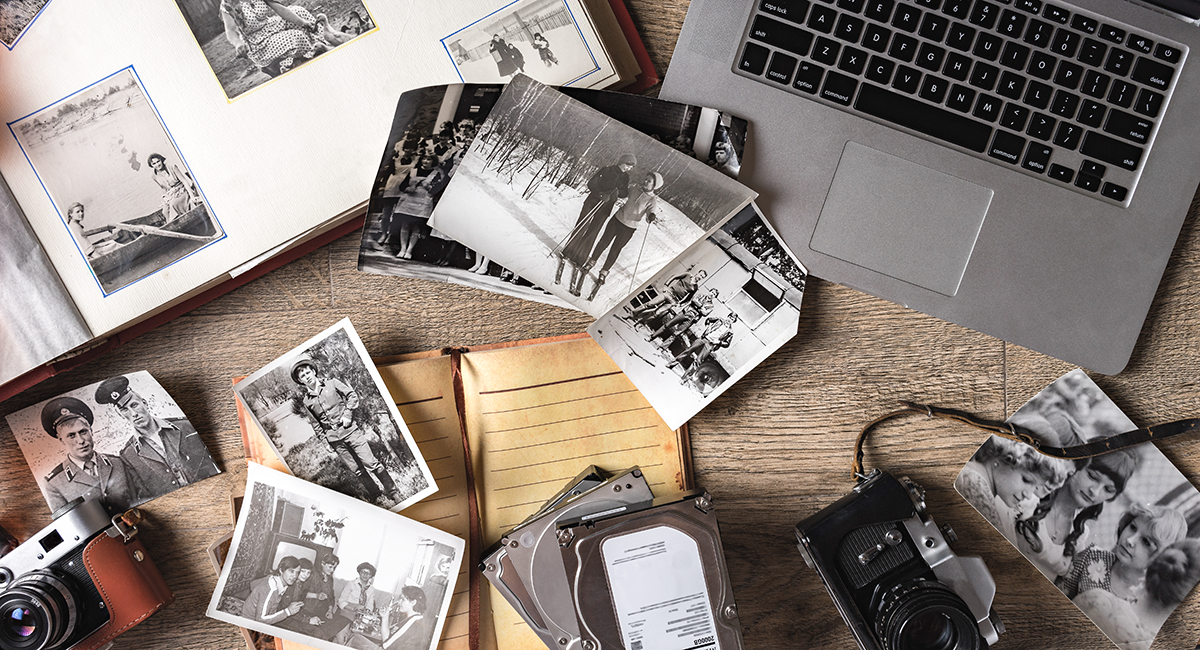
3. Scan Five Family Photos Each Day
Old photographs are one of the most valuable pieces of family history, but they are also easily lost or damaged over time.
Commit to scanning just five photos each day. By the end of the month, you will have preserved approximately 150 images.
Digitizing family photos allows them to be safely stored, easily shared, and preserved for future generations as part of your family history project.
4. Add Simple Captions and Context
A photograph without context can lose meaning over time.
When scanning photos, take a moment to write a short caption that includes:
- Who appears in the photo
- Where it was taken
- The approximate year
- What was happening at that moment
Even a brief description transforms a simple image into a lasting story within your family archive.
5. Share Your Family History Project
By day 30, you will have the foundation of a meaningful family archive.
Share the project with relatives and invite them to contribute additional memories, names, or dates you might have missed. Often, one story sparks another, turning a small project into a living record of your family’s history.
A collaborative approach can help your family history project grow over time.
Preserving Family History Is Part of Preserving Your Legacy
Legacy is often thought of in financial terms, but it also includes the traditions, stories, and values families pass from one generation to the next.
A family history project helps preserve the emotional and cultural legacy that defines your family.
At Hall Financial Advisors, we believe legacy planning is about more than assets. It’s about protecting what matters most, including the stories and values that shape future generations.
Financial Planning Services That Support Your Family’s Legacy
While documenting family stories preserves memories, thoughtful financial planning helps preserve the resources and opportunities that support future generations.
At Hall Financial Advisors, we provide a range of services designed to help families build and protect their legacy, including:
- Wealth Management Services for long-term portfolio strategy and oversight
- Advisory Services providing objective financial guidance
- Retirement Planning Services designed to support lasting financial security
- Investment strategies across Equity Investments and Fixed Income
- Coordinated Estate Planning Strategies
- Education Planning for future generations
- Specialized Oil and Gas Financial Guidance
- Access to Lending Services when needed
- Expertise backed by Certified Financial Planning and CPFA™ Certified credentials
- A firm commitment to Client Confidentiality
As a Forbes Best-in-State Wealth Management Team in West Virginia, our goal is to help clients preserve both their financial legacy and the values they wish to pass forward.
Start Your Family History Project Today
You do not need perfect records or professional tools to begin preserving your family’s history. A few small steps each day can create a meaningful archive of stories, photos, and traditions that future generations will treasure.
And while documenting family history preserves the past, thoughtful financial planning helps protect the future.
If you would like to discuss strategies for preserving and passing on your family’s financial legacy, our team would be happy to help.
Schedule a no-obligation consultation by calling 866-865-4442 or visiting our website.
Frequently Asked Questions (FAQs) About Family History Projects
What is a family history project?
A family history project is a structured effort to document and preserve stories, photos, traditions, and experiences from past generations. These projects help families maintain a record of their shared history and pass it on to future generations.
How do I start a family history project?
The easiest way to start a family history project is by choosing a specific theme, interviewing family members, digitizing old photographs, and documenting stories. Even small steps taken consistently can build a meaningful family archive over time.
What is the best way to preserve family photos?
Scanning photos and storing them digitally is one of the best ways to preserve family images. Digital copies protect photos from damage or loss and allow them to be shared easily with relatives.
How long does a family history project take?
A family history project can be ongoing, but starting with a simple 30-day framework makes the process manageable. By committing to small tasks each day, such as scanning photos or recording short interviews, families can quickly build the foundation of a meaningful archive.
Why is preserving family history important?
Preserving family history helps future generations understand where they came from and the experiences that shaped their family. It strengthens connections across generations and ensures meaningful stories and traditions are not lost over time.
Securities offered through Raymond James Financial Services, Inc., member FINRA / SIPC, marketed as Hall Financial Advisors LLC. Investment advisory services offered through Raymond James Financial Services Advisors, Inc. Hall Financial Advisors LLC is separately owned and operated and not independently registered as a broker-dealer or investment adviser. 937158

1 The 2025 Forbes ranking of America’s Best-In-State Wealth Management Teams, developed by SHOOK Research, is based on an algorithm of qualitative criteria, mostly gained through telephone and in-person due diligence interviews, and quantitative data. This ranking is based upon the period from 3/31/2023 to 3/31/2024 and was released on 01/09/2025. Advisor teams that are considered must have one advisor with a minimum of seven years of experience, have been in existence as a team for at least one year, have at least 5 team members, and have been nominated by their firm. The algorithm weights factors like revenue trends, assets under management, compliance records, industry experience and those that encompass best practices in their practices and approach to working with clients. Portfolio performance is not a criteria due to varying client objectives and lack of audited data. Out of approximately 11,674 team nominations, 5,331 advisor teams received the award based on thresholds. This ranking is not indicative of an advisor's future performance, is not an endorsement, and may not be representative of individual clients' experience. Neither Raymond James nor any of its Financial Advisors or RIA firms pay a fee in exchange for this award/rating. Compensation provided for using the rating. Raymond James is not affiliated with Forbes or SHOOK Research, LLC. Please see https://www.forbes.com/lists/wealth-management-teams-best-in-state for more info.